About discovery

12/07/11

Home
About Me
About discovery
Photo Gallery
Contact me


horizontal rule

                                                                                                                                                                  About Discovery

About Discovery

bullet

 More explain about discovery of prime numbers formula

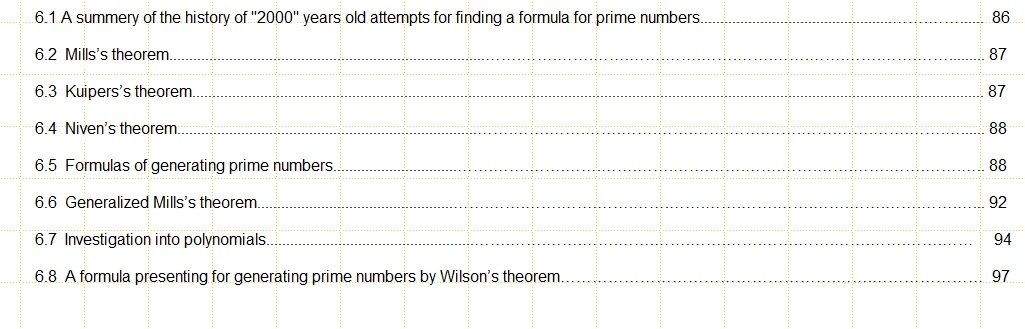
 Infinity proof of prime numbers was propound 300 years before the Christian era by Euclid and since that time great mathematician like Euler try to discover a formula for production of prime numbers.

Euler could define a quadratic function which give prime numbers for forty prime number which are uninterrupted and also Fermat presented a formula to obtain prime numbers and later, it breached by Euler for n = 5.

Many of other mathematicians achieved to violating and especially formula and finally they found that discovery of prime numbers formula is impossible and this problem will be unsolvable.

In fact this discovery means that one of complicated and unsolvable mathematics problem was solved and this discovery give this fact to man that earthy human can solve other unsolvable problems with research and effort.

I have worked about this problem around 20 years and I found this fact that I can't comeback from this path which I came and I promised that search about this un solvable problem till end of my life even if I couldn't achieve the final solution.

Of course my research had result with patronage under god and trust in god and I discovered the formula of prime numbers.

horizontal rule

bullet

How is the usage of this formula in mathematics  and other sciences?

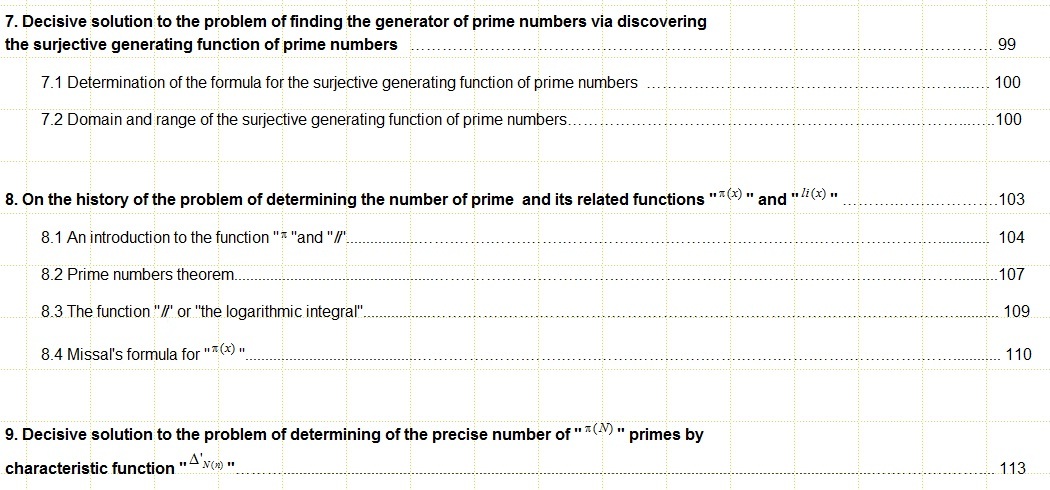
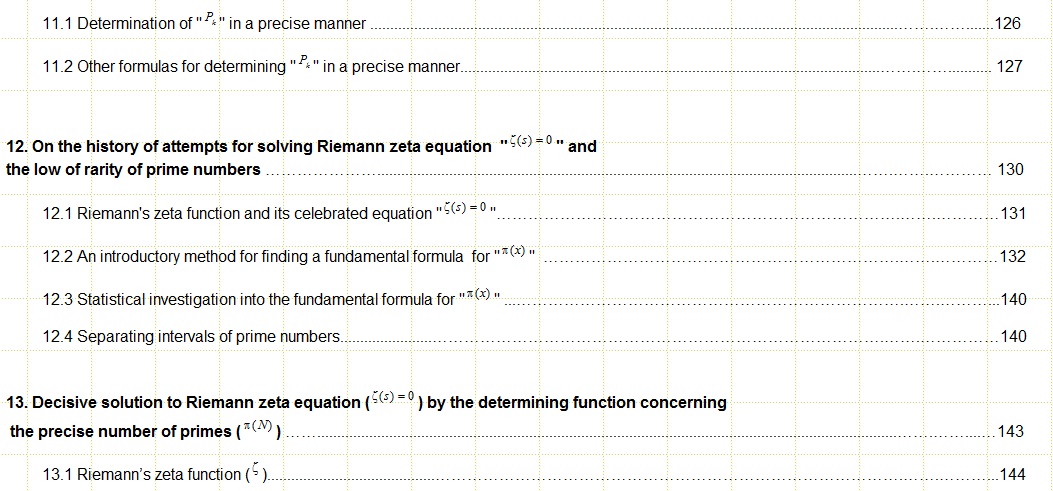
 A result for discovery of prime numbers formula is the solution of Riemann Zeta equation which is on of seven universal unsolvable problems in mathematics millennium and it's solution need to gain the number determination equation of prime number for any desirable number n carefully (with prime numbers formula).

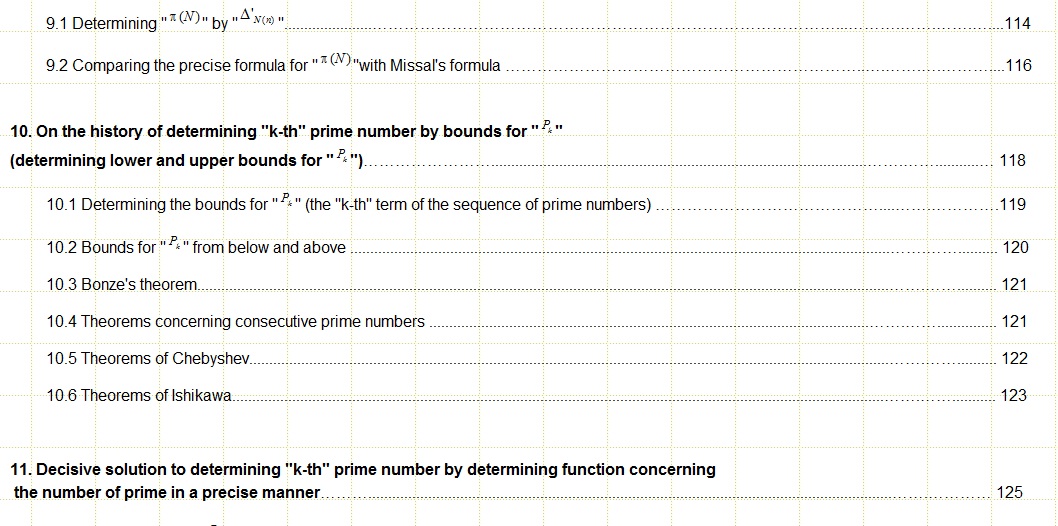
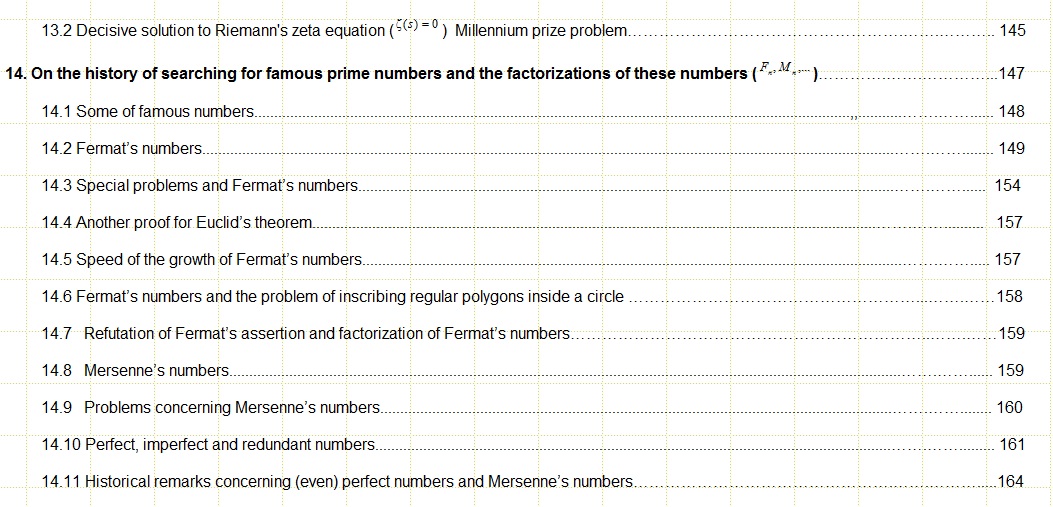
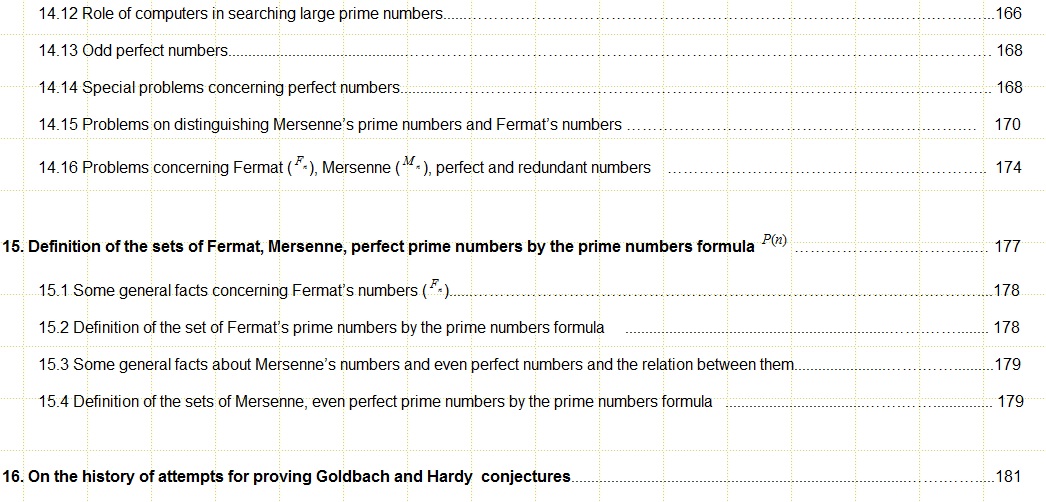
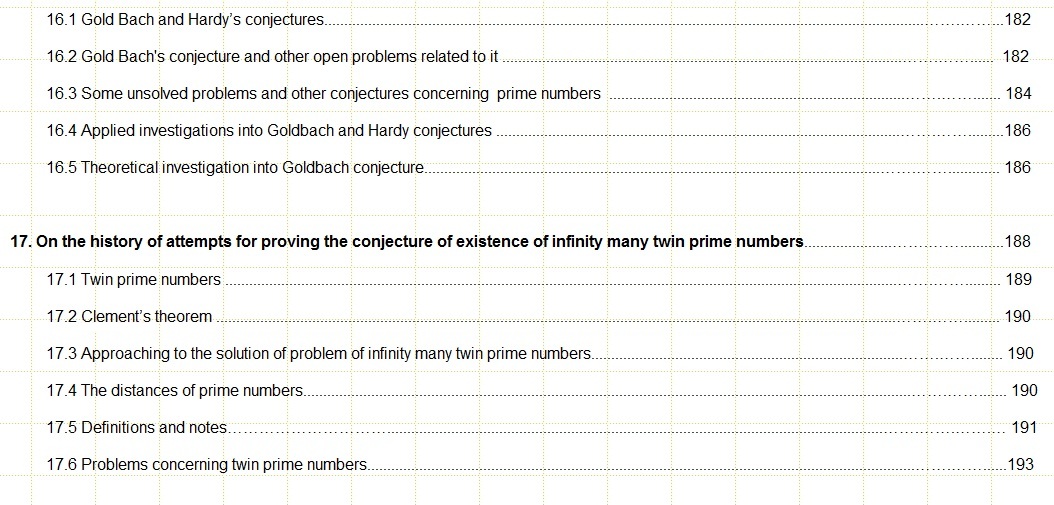
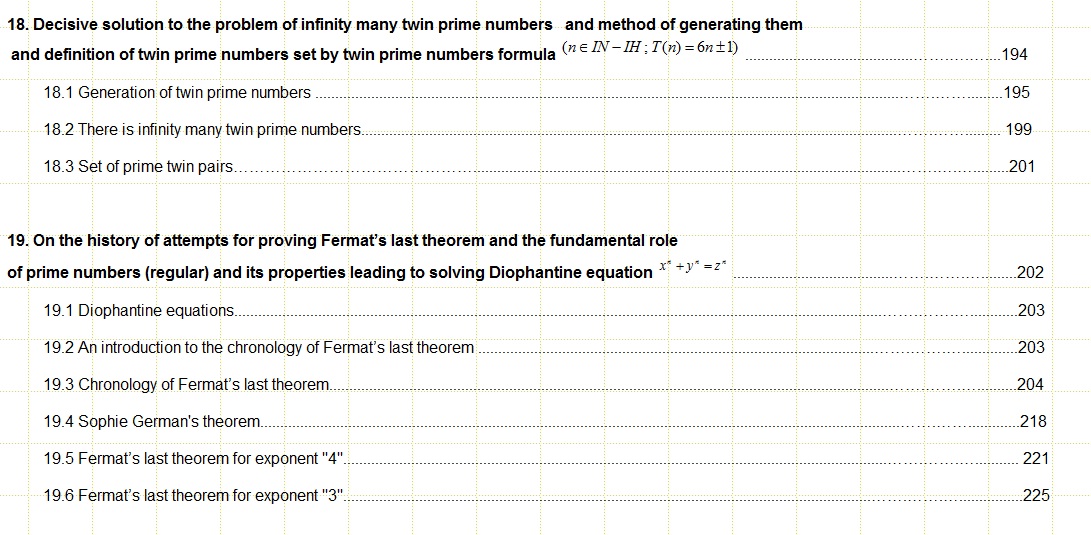
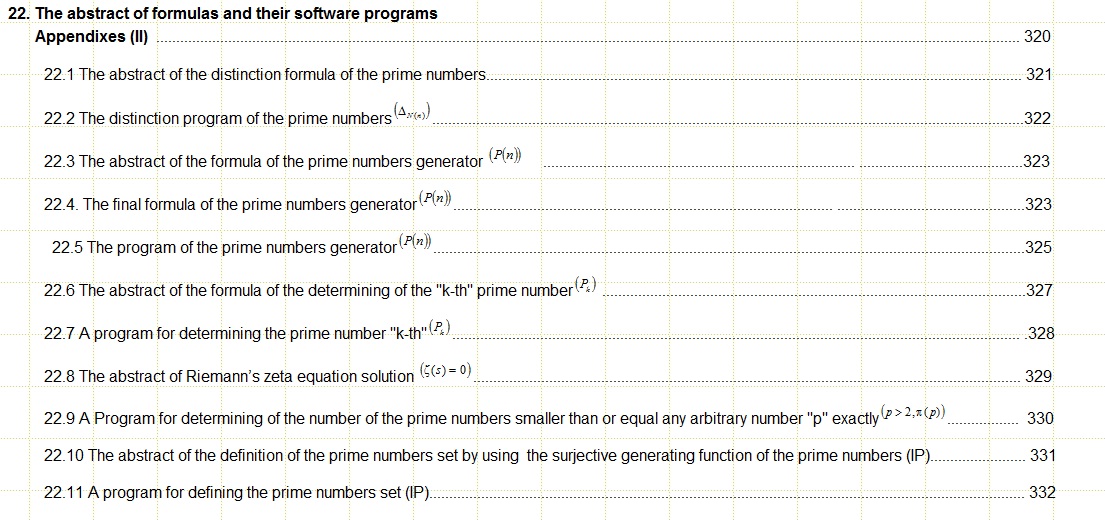
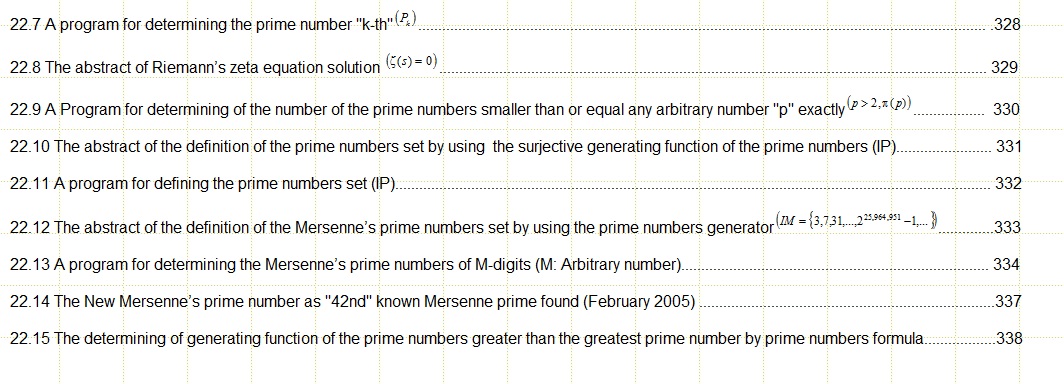
Another result is determination of Kth desirable prime number and other usages are definition of prime number set, proof of infinity of prime twin pairs, considering of the guesses of Goldbuch and Hardy, gaining the generator formula of Mersenne prime numbers and also very unknown and big prime numbers and other problems related to prime numbers.

But the basic and cardinal usage of this formula is in coding and decoding that usually use from very big prime numbers for this and before it is necessary to gain them with complicated mathematics methods. But with presenting of this formula, definition of coding and decoding system became easy and I invent a system for coding with this formula that I presented this system inventions registration organization.

horizontal rule


After Euclid’s theory about infinite prime numbers in 300 B.C Most of the mathematicians and other researchers have been curious to find a formula which could generates prime numbers. After many years later, some mathematicians like Euler and Fermat presented some formulas to generate prime numbers limitedly.

Great mathematicians like Hardy and Courant and many other researchers officially announced that such a formula can’t be found and in follow to prove their wrong idea they started to publish some Algebraic theorems in their books.

Meanwhile, Niven and Mills in relation to prime numbers function proved the above theorem. But their parameters have never been determined.

Furthermore, determining the number of prime numbers was very important problem. So Gauss and other mathematicians started to set some tables for them.

We knew that there is no exact formula to determine the number of prime numbers exactly. This problem is known as Zeta Riemann equation which was one of the seven known unsolvable problems of the world that after my discovery on 5th August 2003, one of them is no more unsolvable with the prime numbers formula accurately you can absolutely generate all prime numbers to the nth one.

Its consequent generate of prime numbers formula resulted in defining the set of prime numbers and so many other unbelievable results until now like breaking the code of RSA and AES by the use of prime numbers formula and other sets like Mersenne prime, perfect numbers and so many important sets and results just related to the field of number theory and basic sciences.

Discovery of prime numbers formula by Prof. Seyyed Mohammadreza Hashemi Moosavi caused so many results in basic sciences that we will mention a little part in follow:

1.       Distinction of prime numbers.

2.       Defining a formula for generating prime numbers.

3.       Definition of prime numbers set by using the generating function of prime numbers.

4.       Defining a formula to generate the Mersenne prime numbers.

5.       Determination of Nth prime number.

6.       Solving Riemann Zeta equation by using the determination of the number of prime number less than or equal to arbitrary number N exactly.

7.       The proof of guesses of Goldbuch and Hardy.

8.       The proof of infinity of the prime twin couples.

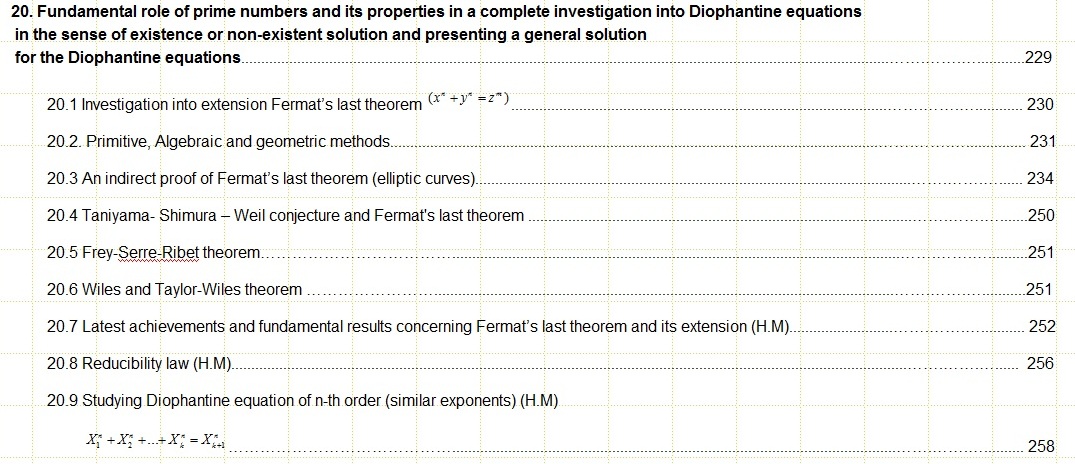
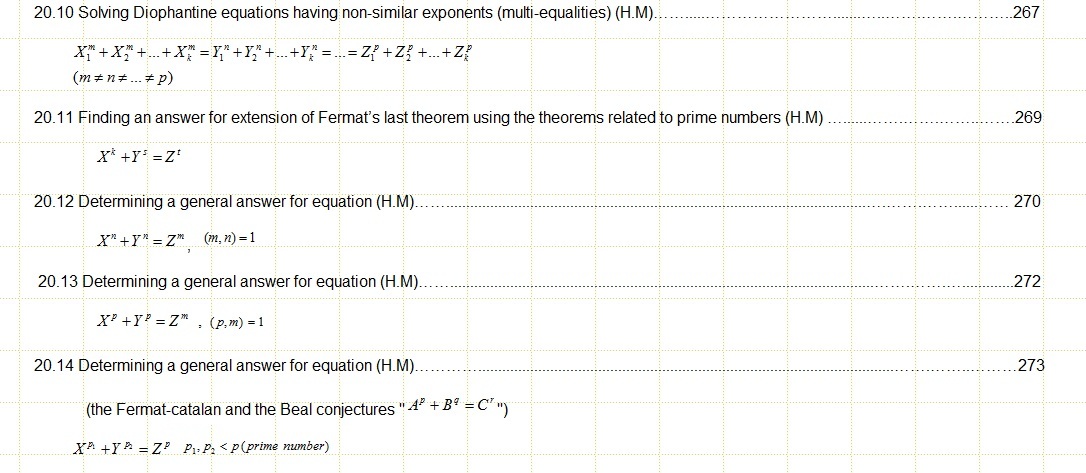
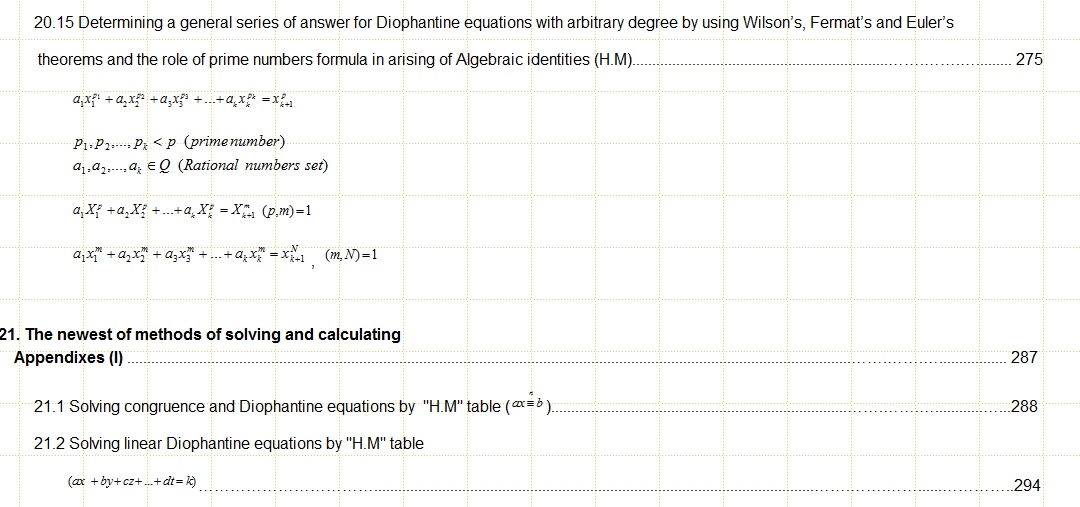
9.       Determining a general series of answer for Diophantine equations.

10.   This formula has so many unknown applications in Cryptography, generating Titan Mersenne prime numbers and other sciences like solving  NP.


horizontal rule


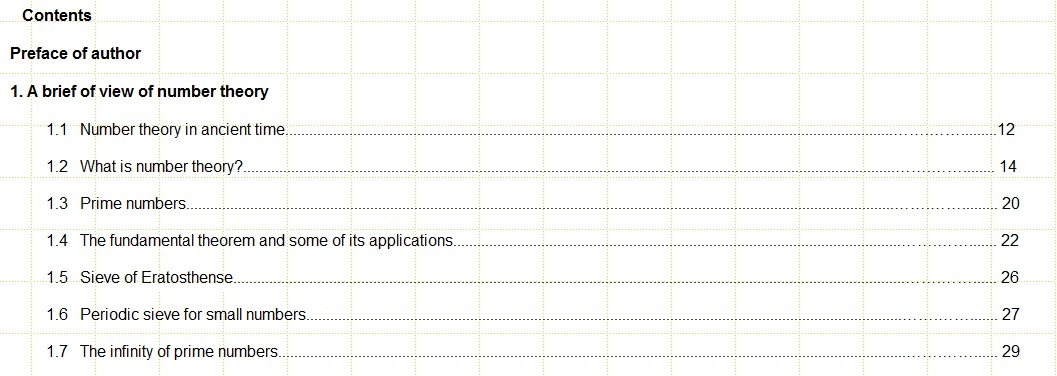
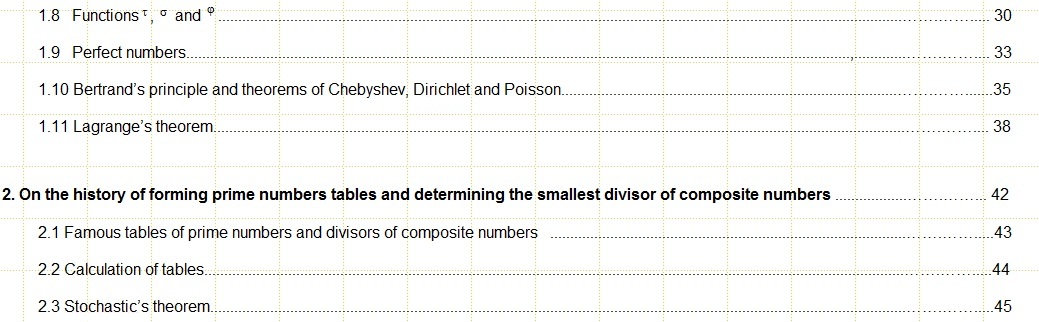
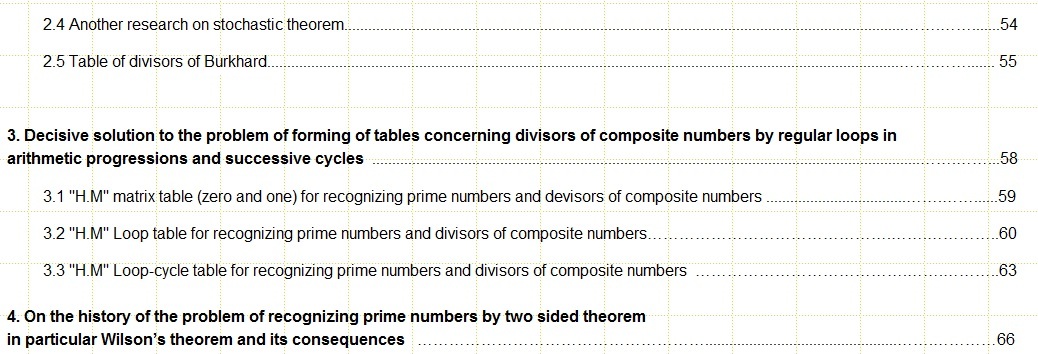
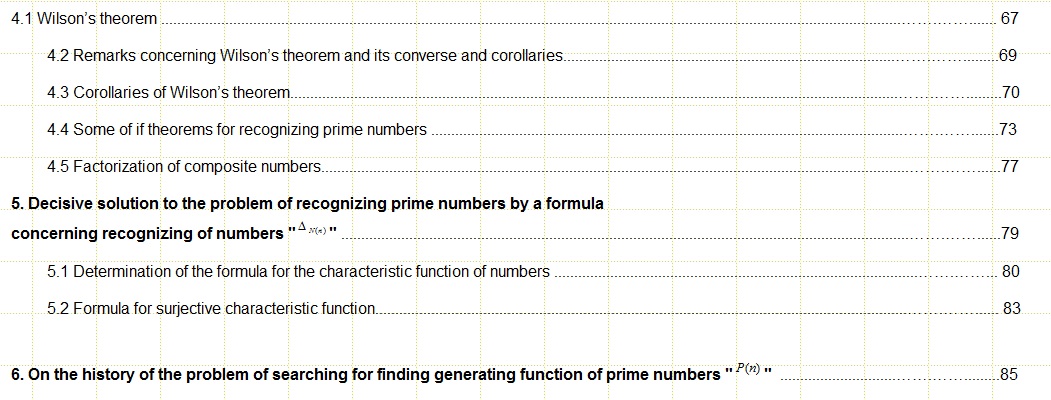
CHAPTER 5

Decisive solution to the problem of recognizing prime numbers by a formula concerning recognizing numbers ""


5.1. Determination of the formula for the characteristic function of numbers

At first we form a matrix of "0" and "1" for odd natural number and according to their divisibility on every odd number:


1

3

5

7

9

11

13

15

17

19

21

23

25

27

29

31

33

35

37

39

41


1

1

0

0

0

0

0

0

0

0

0

0

0

0

0

0

0

0

0

0

0

0

...

3

1

1

0

0

0

0

0

0

0

0

0

0

0

0

0

0

0

0

0

0

0

...

5

1

0

1

0

0

0

0

0

0

0

0

0

0

0

0

0

0

0

0

0

0

...

7

1

0

0

1

0

0

0

0

0

0

0

0

0

0

0

0

0

0

0

0

0

...

9

1

1

0

0

1

0

0

0

0

0

0

0

0

0

0

0

0

0

0

0

0

...

11

1

0

0

0

0

1

0

0

0

0

0

0

0

0

0

0

0

0

0

0

0

...

13

1

0

0

0

0

0

1

0

0

0

0

0

0

0

0

0

0

0

0

0

0

...

15

1

1

1

0

0

0

0

1

0

0

0

0

0

0

0

0

0

0

0

0

0

...

17

1

0

0

0

0

0

0

0

1

0

0

0

0

0

0

0

0

0

0

0

0

...

19

1

0

0

0

0

0

0

0

0

1

0

0

0

0

0

0

0

0

0

0

0

...

21

1

1

0

1

0

0

0

0

0

0

1

0

0

0

0

0

0

0

0

0

0

...

5.1.1. Explanation

If numbers in columns are divisible on the numbers in rows, their intersection in the table has a value as "1" and if they are not divisible, and their intersection has a value as "0".

? First column has only "1" because all of numbers are multiplier of "1".

? Second column indicates multipliers of 3.

? Third column indicates multipliers of 5.

? And as it is seen, every column has multipliers of a number.

According to table rows, when in front of every column number just two numbers "1" are written, in fact that column number is a prime number because "every prime number is divided just into "1" and itself". And to knowing that "for identifying the primality of specific number "N", it is enough to divide "N" into prime numbers which are not more than ". For identifying column number it is enough to attend row of that number. If in one row there are more than two numbers "1", that number is not prime column number. For example the  row concerned to number "15", has four numbers "1" , because it is divisible on 1,3,5 and 15 therefore "15" is composite. But rows of (3, 5, 7, …, 17, 19, ...) have just two numbers "1". So this numbers are Prime. For identifying the numbers, it is enough to find some functions that produce every one of table column. On the other hand it produces all of "0" and "1" in every column with the same column arrange (from up to end).


The general formula of these functions is:


1

1

0

0

0

0

0

3

1

1

0

0

0

0

5

1

0

1

0

0

0

7

1

0

0

1

0

0

9

1

1

0

0

1

0

11

1

0

0

0

0

1

13

1

0

0

0

0

0

15

1

1

1

0

0

0

17

1

0

0

0

0

0

19

1

0

0

0

0

0


According to the table and this point identify numbers "N", it is enough to divide it into prime numbers which are not more than, therefore, we divide "N" on odd numbers which are not more than it, to  calculate odd numbers which are not more than, the sum of functions of the numbers in column "x" is enough. Therefore, if "N" is prime, we have just one number "1" in row of number "N":

("N" is prime number)              

If "N" is composite:

("N" is not prime number)     


We know that "1" is neither prime nor composite and also, therefore, if "N" is an odd number and greater than  then:

    (3)

That *S value is:               

5.1.2. Attention

"" is prime or composite and these two cases will be determined by identification function  and always just two cases (3) namely "0" and "1" will be accrued. Therefore, if we write a function by using  it is a surjective function (in the set of odd numbers that are greater than "3").


According to primary conditions, we form the below table:


1

2

3

4

5

6

7

8

9

50

3

5

7

9

11

13

15

17

19

101

1

1

1

0

1

1

0

1

1

1


Now, we content one by presenting another example to show application of this function.

5.1.3. Example

At first we calculate *S for identifying the number  to be prime or composite:

Then we form function:

Since "" so, number "2003" is a prime number.

5.1.4. Example

`           For determining number"" if we calculate an example like (5.1.3), it results:

Since "" so number "" is a composite number.

5.1.5. Result

According to above examples, It is observed that for determining a number like "N", It is enough to calculate () by a simple software program[1]. It is obvious that in this method, for determining number "N", only answers of dividing "N" on all of odd numbers smaller than are used. Therefore, for determining number "N", we do the least possible calculation by this method software program of this identification function.

5.2. Formula for surjective characteristic function

If we want the identification function to accept, we can use one of two following identification functions instead of it ():


5.2.1. Attention

Number "*S" is the same for ,, and is calculated by the following relation:

Therefore, for every odd number greater than "1" ():

5.2.2. Result

The identification function (1)  can be used for all odd numbers:


5.2.3. "H.M" theorem

If "" is prime then "" and is not prime "".


horizontal rule

[1] . Refer to the appendixes II (22.2)


Home | About Me | About discovery | Photo Gallery | Contact me

This site was last updated 12/07/11